
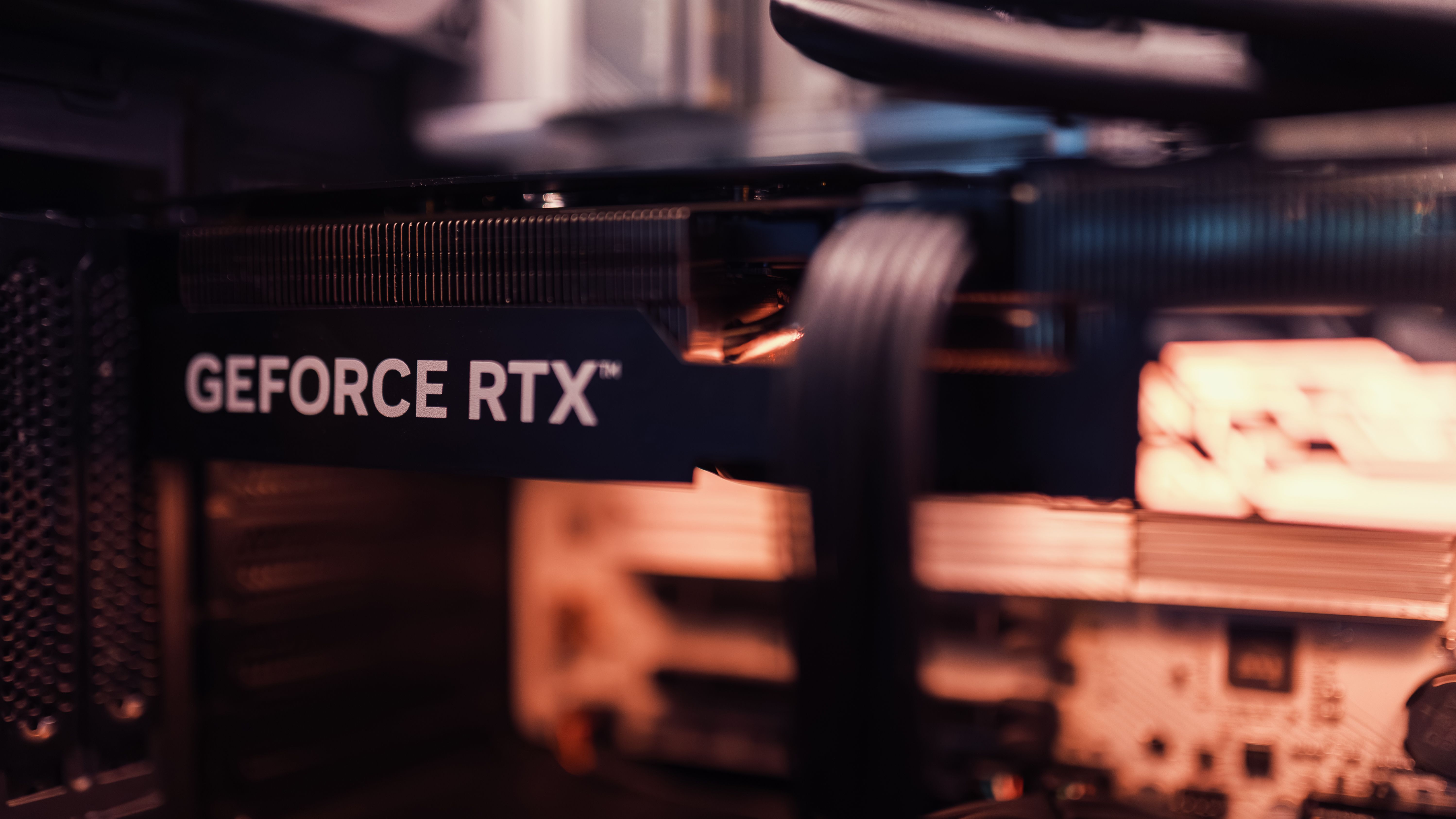
Artificial intelligence is becoming more capable at an incredible pace. But as models grow larger and systems become more sophisticated, much of that intelligence still depends on remote infrastructure.
You send a request to a server. The server runs the model. The result comes back.
That works extremely well. But we think there is another direction worth exploring.
What happens when increasingly capable AI can run closer to the machine, and eventually on the machine itself?
That question is at the center of Titan Forge Industries’ interest in local and edge AI.
We are not arguing that consumer hardware can replace massive AI data centers. It cannot. The interesting question is much more practical:
How much useful intelligence can we fit into the hardware people can actually afford, own, and control?
The Cloud Is Not the Whole Story
Cloud-based AI has obvious advantages.
Large infrastructure allows companies to deploy models with enormous parameter counts, large memory footprints, specialized accelerators, and substantial inference capacity. Users do not need to own that hardware themselves.
But centralized AI also introduces constraints.
Your application may depend on an internet connection. Your data may need to leave the device. Latency depends partly on the network between you and the model. Costs can scale with usage. Access to a model can also depend on the service provider continuing to offer it.
Local AI changes that equation.
When inference happens on hardware you control, the relationship between the user and the AI system becomes much more direct.
The model is there.
The compute is there.
The data can stay there.
And the system can continue operating even when the connection to a remote service does not.
That does not make local AI universally better. It makes it different, and that difference creates an engineering problem worth solving.
Local AI Changes the Engineering Constraints
Running a powerful model locally is not simply a matter of downloading a larger model.
Every local system has a finite amount of compute, memory, storage, bandwidth, and power.
A model might technically fit into memory and still perform poorly because memory bandwidth becomes the bottleneck. Another model might run quickly but require compromises in precision or context length. A smaller model may be extremely efficient but lose capabilities that matter for a particular application.
That means the important question is not simply:
"How large is the model?"
It is:
"How much capability can we get from a fixed amount of hardware?"
That leads to a very different way of thinking about AI systems.
Instead of optimizing only for model size or benchmark performance, we can look at capability per dollar, capability per watt, memory efficiency, inference speed, context efficiency, and overall system responsiveness.
Those tradeoffs become especially important as AI moves from the cloud toward personal computers, workstations, robots, vehicles, embedded systems, and other edge devices.
The Case for Privacy and Control
One of the most obvious advantages of local inference is control over data.
Not every AI task is sensitive, but some are.
A local system can make it possible for information to remain on the device instead of being transmitted to an external service. Depending on the application and implementation, that can reduce the number of external systems involved in processing the data.
There is also a broader ownership question.
When an AI system depends entirely on a remote API, the user does not control the underlying infrastructure. Changes to pricing, availability, rate limits, model access, or service policies can affect the application.
A local system has different tradeoffs.
The user is responsible for the hardware, software, updates, security, and maintenance. That is more work. But it also means greater control.
For some applications, that tradeoff is worthwhile.
Resilience and Latency Matter Too
There are situations where waiting for a remote server is perfectly acceptable.
There are also situations where it is not.
An AI system operating machinery, monitoring a physical environment, assisting with robotics, or responding to real-time sensor input may benefit from keeping inference close to the system generating the data.
The shorter the path between input and inference, the fewer external dependencies there are.
Local processing can also provide a degree of resilience.
A system that can continue performing important functions without an internet connection is fundamentally different from one that stops when connectivity disappears.
This is one reason edge computing has applications far beyond personal AI assistants.
The same principles apply to autonomous systems, industrial equipment, robotics, scientific instruments, and other environments where connectivity, latency, or data movement can become limiting factors.
The Real Bottleneck Is Often Memory
One of the most interesting challenges in local AI is memory.
Modern models can require enormous amounts of memory, particularly when working with larger parameter counts, longer context windows, or higher-precision representations.
That creates a fundamental limitation for consumer hardware.
A graphics card may have enough compute capability to perform useful inference, but not enough VRAM to comfortably hold everything the model requires.
This is where techniques such as quantization become important.
Quantization reduces the numerical precision used to represent model parameters. In practical terms, that can significantly reduce memory requirements and sometimes improve inference efficiency, while introducing a tradeoff in model quality or behavior.
The challenge is finding the point where the reduction in resource requirements is worth the cost.
The goal is not simply to make a model smaller.
The goal is to make it efficient enough to remain useful.
That distinction is important.
Efficiency Is a Capability Problem
We think the future of local AI will depend on more than simply building larger models.
Better efficiency can create entirely new possibilities.
Architectural improvements can reduce unnecessary computation. Better memory management can allow larger workloads to operate within limited hardware. Quantization can make previously impractical models accessible to smaller machines. Smarter inference systems can reduce wasted compute.
Even hardware that looks underpowered by data-center standards can become interesting when the software stack is designed around its actual constraints.
That is the problem we want to explore.
Rather than assuming that useful AI requires increasingly expensive infrastructure, we want to investigate how far careful engineering can push the hardware that already exists.
What We’re Investigating
Our research direction is centered around the practical limits of local AI.
That includes questions such as:
How much model capability can be delivered within a fixed VRAM budget?
How do different quantization strategies affect the balance between memory usage, speed, and capability?
What becomes possible when inference is optimized around consumer hardware instead of data-center hardware?
How much does memory bandwidth matter compared with raw compute?
How should AI systems divide workloads between CPU, GPU, system memory, and potentially multiple machines?
What happens when local AI becomes part of a larger autonomous system instead of simply acting as a chatbot?
These are not questions with one universal answer.
Different workloads will produce different results.
A model optimized for conversation may have very different requirements from one performing code generation, computer vision, robotics, scientific reasoning, or real-time control.
That is exactly why we think the research matters.
Building for Hardware We Can Actually Access
There is another reason we are interested in this problem.
Research is more useful when it can be tested against real constraints.
It is easy to design a system around unlimited compute.
It is much more interesting to ask what can actually be built with hardware that exists outside a massive data center.
Consumer GPUs, workstations, laptops, and small edge computers have finite resources. Those limitations force better questions.
Which optimizations actually matter?
Which compromises are acceptable?
Which bottlenecks are architectural?
Which problems can be solved through software instead of more hardware?
And most importantly:
How much capability are we leaving on the table simply because we have not optimized for the environment where the AI will actually run?
The Goal Is Not Just Local Inference
We are still early in this work.
That is intentional.
Titan Forge Industries is interested in local AI as part of a larger question about how intelligent systems can be built when computation is moved closer to the machine, the user, and eventually the physical world.
The long-term implications extend beyond running a language model on a desktop.
Local inference could become part of autonomous systems, robotics, personal computing, industrial tools, scientific platforms, and other systems that need intelligence without depending entirely on a remote service.
The underlying principle remains the same.
More capable AI does not necessarily have to mean more dependence on centralized infrastructure.
There is another path worth investigating.
What Success Looks Like
We do not think success means proving that local hardware can simply replace frontier-scale data centers.
That is the wrong comparison.
Success would mean finding ways to make significantly more capable AI practical on constrained hardware than current assumptions suggest.
It means understanding the real bottlenecks instead of treating hardware limitations as a dead end.
It means measuring tradeoffs honestly.
And it means building systems where efficiency is treated as a core part of capability rather than an afterthought.
Titan Forge Industries is still at the beginning of that process.
We will be documenting the research as it develops, including the approaches that work, the approaches that do not, the hardware limitations we encounter, and the engineering decisions that change our direction.